
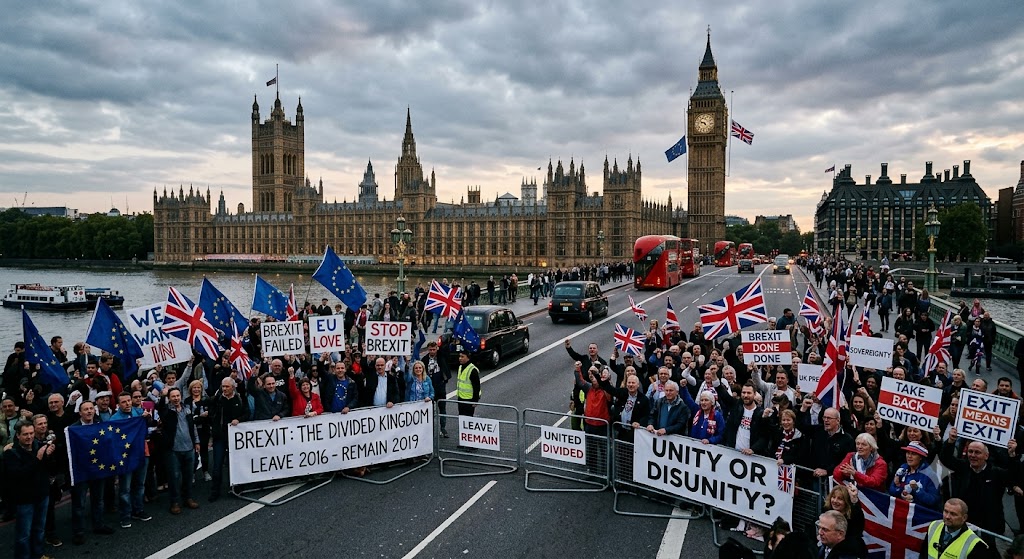
Brexit and the Global Economy: What the UK’s Exit from the European Union Teaches Us About International Cooperation

Introduction
The global economy has become increasingly interconnected. Products manufactured in one country are sold in another, companies operate across borders, and investors seek opportunities around the world.
In this environment, economic alliances and international agreements play an important role in growth, stability, and competitiveness.
One of the most significant political and economic events of the 21st century was Brexit, the United Kingdom’s decision to leave the European Union.
But what were the economic consequences of this decision? And what lessons can investors and citizens learn from this experience?
What Was Brexit?
The term Brexit comes from the combination of “Britain” and “Exit”, referring to the United Kingdom’s departure from the European Union.
Supporters of Brexit argued that leaving the bloc would allow the UK to have greater independence over legislation, immigration policies, and international trade agreements.
Opponents warned that the decision could create challenges for commerce, investment, and economic growth.
After several years of negotiations, the United Kingdom officially left the European Union in January 2020.
The Economic Impacts Observed After Brexit
Although economists have different perspectives about Brexit, several challenges have been identified following the UK’s departure from the European Union.
1. Increased Trade Complexity
UK companies began facing new customs procedures and regulatory requirements when trading with European Union countries.
For many businesses, this created additional costs, delays, and logistical challenges.
Companies that relied heavily on European markets had to adapt to a new commercial environment.
2. Economic Growth Challenges
Several economic analyses indicate that the United Kingdom experienced periods of weaker growth compared to some expectations before Brexit.
It is important to recognize that other global factors, such as the COVID-19 pandemic, inflation pressures, and international conflicts, also affected economic performance.
However, many analysts believe Brexit contributed to some of the economic challenges faced by the country.
3. Labor Market Changes
Some industries, including transportation, agriculture, hospitality, and services, experienced difficulties related to labor availability.
Changes in immigration rules affected the movement of workers between the UK and European countries.
4. Impact on the Cost of Living
Changes in trade processes, supply chains, and global inflation contributed to higher costs for many consumers.
For households, economic decisions made at a government level can eventually influence everyday expenses such as food, energy, and services.
Why Are Economic Alliances Important?
The Brexit experience highlights an important economic debate:
How much can cooperation between countries contribute to economic development?
While every country has different priorities and challenges, international cooperation can create several advantages.
Easier Trade Between Countries
Reducing trade barriers allows companies to access larger markets and operate more efficiently.
This can increase competition, encourage innovation, and provide consumers with more choices.
Attracting Foreign Investment
Investors generally look for countries with stability, predictable regulations, and strong economic connections.
Participation in economic alliances can increase a country’s attractiveness for international businesses.
Sharing Technology and Innovation
Cooperation between nations encourages knowledge exchange, scientific development, and technological progress.
These factors can improve productivity and strengthen economic competitiveness.
Creating Employment Opportunities
Economic growth, business expansion, and foreign investment can generate new jobs and improve income opportunities for citizens.
How Does International Politics Affect Your Money?
Many people believe that geopolitical decisions are distant from their daily lives.
However, international events can directly influence personal finances.
Global decisions can affect:
- Food prices;
- Energy costs;
- Inflation rates;
- Employment opportunities;
- Economic growth;
- Investment returns.
For this reason, understanding global economic trends can help investors make better financial decisions.
Lessons for Investors
The Brexit case also provides important lessons for investors.
Diversification Matters
Political decisions can create unexpected market movements.
A diversified portfolio across different companies, sectors, and regions can help reduce specific risks.
Understanding Global Trends Is Essential
Decisions made in London, Brussels, Washington, or Beijing can influence companies and financial markets worldwide.
Investors who understand international trends are better prepared to identify risks and opportunities.
Long-Term Planning Is Key
Political events often create short-term market volatility.
However, companies with strong fundamentals and investors with disciplined strategies tend to be better positioned over the long term.
Conclusion
Brexit remains one of the most important economic and political events of recent decades.
Regardless of personal opinions about the decision, the experience demonstrates how international relationships, trade agreements, and economic alliances can influence businesses, workers, consumers, and investors.
In an increasingly connected world, understanding global economics has become an essential skill for anyone seeking to protect wealth and make more informed financial decisions.
Want to understand how global events can impact your investments?
Follow André Vilabrisa for content focused on financial education, economic analysis, investments, and strategies designed to help investors navigate an increasingly complex global economy.