Trump Wants Countries to Pay for Protection in the Strait of Hormuz: Does This Strategy Resemble the Logic of a “Protection Racket”?

Donald Trump’s proposal that other countries should help pay for U.S. military protection in strategic regions has once again sparked debate among economists, international relations experts, and investors.
At the center of the discussion is the Strait of Hormuz, one of the world’s most important maritime chokepoints for oil and natural gas transportation. Any disruption to shipping through this narrow passage can directly affect energy prices, global inflation, and financial markets.
But one question has attracted particular attention: Is charging for the protection of a strategic trade route simply a negotiation between sovereign nations, or does it resemble the logic of a “protection racket”?
Why the Strait of Hormuz Matters
Located between Iran and Oman, the Strait of Hormuz serves as one of the world’s most critical energy corridors.
Millions of barrels of oil pass through the strait every day on their way to Europe, Asia, and North America. Any interruption to maritime traffic can trigger sharp increases in oil prices and place additional pressure on the global economy.
For this reason, the United States has maintained a military presence in the region for decades, working alongside allies to help ensure freedom of navigation.
Trump’s Proposal
Trump has repeatedly argued that the United States bears a disproportionate share of the costs associated with protecting global trade routes that benefit many other nations.
From his perspective, countries that rely heavily on these maritime corridors should contribute more financially to their security.
Supporters of this proposal argue that it creates a fairer distribution of defense costs and reduces the financial burden on American taxpayers.
Under this view, the proposal represents a strategic and economic negotiation between sovereign states.
Why Some Critics Draw a Comparison to a “Protection Racket”
Some political analysts and commentators have compared this approach to the concept known as a protection racket—a term commonly used to describe situations in which someone demands payment in exchange for providing protection.
It is important to emphasize that this comparison is a metaphor about the underlying economic logic, not an assertion that governments are equivalent to criminal organizations.
The debate centers on a broader question:
Should a country that controls or secures a strategic resource charge others for providing that security?
This question has appeared throughout the history of international relations.
A Shift in Global Politics?
The discussion also reflects a broader transformation in international affairs.
For decades, the United States played the role of the primary guarantor of global security, often assuming much of the financial burden.
In recent years, however, American political leaders from different perspectives have increasingly argued that allies should shoulder a greater share of defense costs.
If this trend continues, many countries may choose to:
- Increase defense spending;
- Strengthen regional military alliances;
- Diversify their strategic partnerships;
- Reduce their dependence on any single global power.
Such changes could contribute to a more multipolar international system with a less centralized U.S. leadership role.
What Could This Mean for Investors?
Geopolitical developments have become increasingly important for financial markets.
Changes in U.S. foreign policy can influence:
- Oil and energy prices;
- Defense industry stocks;
- Currency exchange rates;
- Inflation and interest rates;
- Investment flows into emerging markets.
For investors, understanding geopolitics has become just as important as analyzing corporate earnings or economic indicators.
Conclusion
Trump’s proposal that countries contribute more financially to the protection of strategic maritime routes has generated sharply different interpretations.
Supporters see it as a legitimate effort to distribute security costs more fairly among nations that benefit from global trade.
Critics argue that the underlying logic resembles what political scientists describe as a protection racket, using the comparison as an analytical framework rather than a literal equivalence.
Regardless of where one stands in this debate, one conclusion is becoming increasingly clear: geopolitics is playing an ever-greater role in shaping financial markets, global trade, and investment decisions.
For investors, entrepreneurs, and business leaders, understanding these global developments can provide valuable insights into emerging risks and opportunities in an increasingly interconnected world.
Stay Informed About the Global Economy
Follow the analyses published for insights on international markets, geopolitics, and investment opportunities.
Visit andresouzainvestimentos.com for articles, financial analysis, and educational content covering economics, investing, and global affairs.
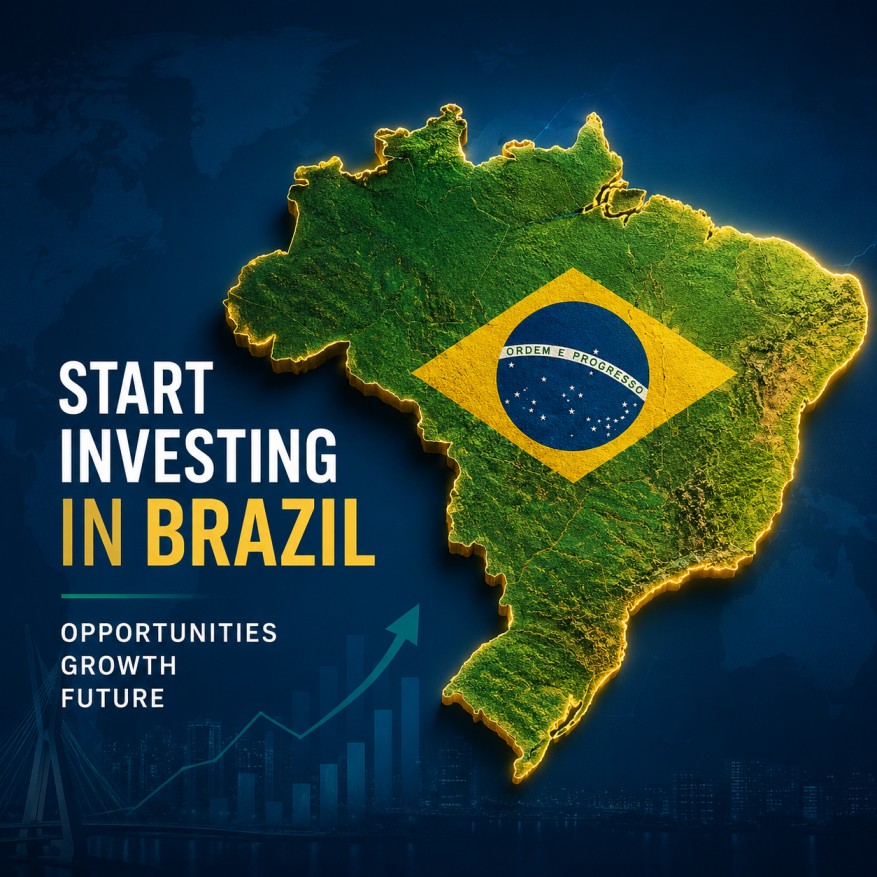
You can also explore startinvestinginbrazil.com, a platform dedicated to helping both Brazilian and international investors better understand investment opportunities in Brazil.
In today’s rapidly changing world, high-quality information remains one of the most valuable assets any investor can have.