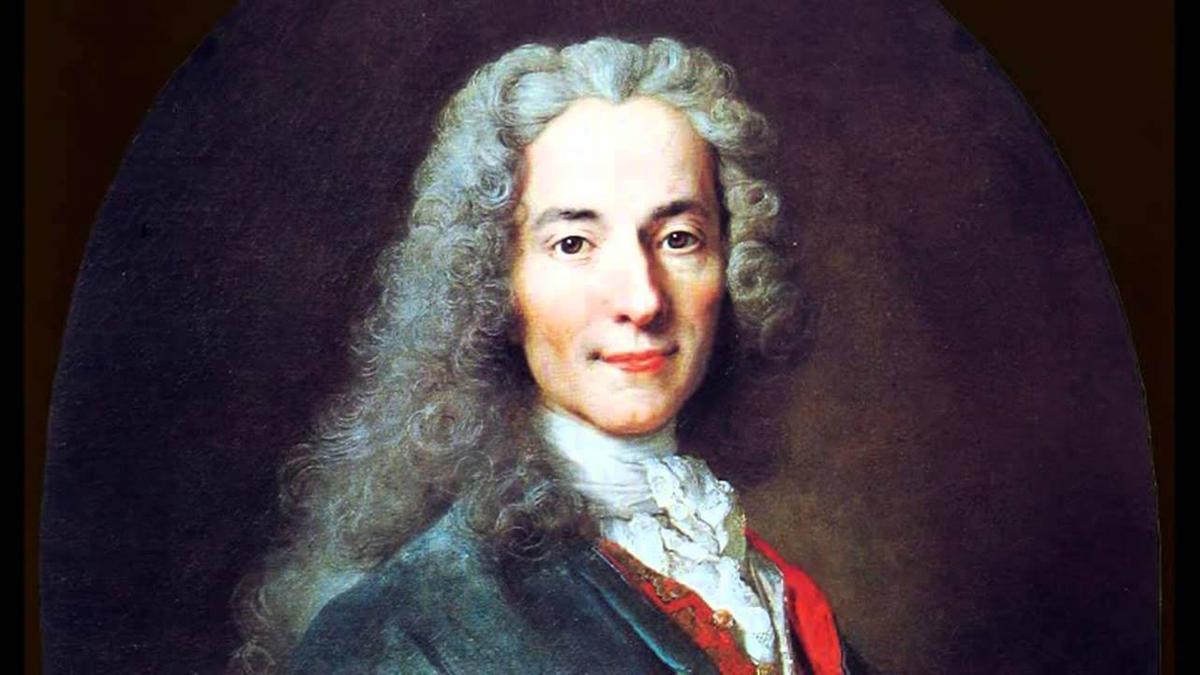

When most people think of Voltaire, they picture one of the greatest philosophers of the Enlightenment. A writer, thinker, and advocate for freedom of expression, he left a lasting mark on intellectual history.
What many people do not know is that Voltaire was also a highly successful investor. At a time when most intellectuals depended on the support of nobles and political leaders, he built a substantial fortune of his own, securing the financial independence needed to defend his ideas and live according to his principles.
Although the financial markets of the eighteenth century were very different from those we know today, several of the strategies that contributed to Voltaire’s success remain relevant for modern investors.
How Voltaire Built His Fortune
Contrary to the image of a philosopher detached from economic matters, Voltaire had a strong interest in business and finance.
He participated in financial operations related to French public debt and identified opportunities created by inefficiencies in the economic system of his time. He also invested in real estate, commercial ventures, and productive enterprises that generated recurring income.
His wealth grew steadily over the years, allowing him to achieve a high degree of financial security and independence.
More important than the specific investments themselves was his mindset: Voltaire understood that wealth was a tool for freedom.
The Importance of Identifying Opportunities
One of Voltaire’s most remarkable qualities as an investor was his ability to recognize opportunities that others overlooked.
Many of the greatest investment returns come from situations where the market has not yet fully recognized the value or potential of an asset.
Of course, this does not mean taking excessive risks or investing without proper research. On the contrary, success is often linked to careful analysis, understanding economic conditions, and evaluating risks rationally.
Today, this lesson remains highly relevant for investors seeking to build long-term wealth.
Diversification Was Important Then—and It Still Is
Although the modern concept of diversification had not yet been formally developed, Voltaire spread his resources across different economic activities.
He did not rely on a single source of income.
Modern investors can apply the same principle by diversifying among fixed-income securities, stocks, real estate investment vehicles, international assets, and other investments suited to their financial goals and risk tolerance.
Diversification helps reduce risk and strengthens a portfolio’s ability to navigate different market environments.
Financial Independence as the Ultimate Goal
Perhaps Voltaire’s greatest lesson has less to do with investing itself and more to do with the purpose behind it.
He used wealth to gain independence.
Financial freedom allowed him to publish his works, travel, support personal projects, and defend his beliefs without relying on the approval or support of others.
This concept remains highly relevant today.
Many people begin investing with the simple goal of earning higher returns. Over time, they discover that the true objective is gaining greater control over their future, career choices, family decisions, personal projects, and quality of life.
What Can We Apply in the Twenty-First Century?
Modern investors operate in a world that is far more sophisticated and accessible than the one Voltaire experienced.
Today, individuals can invest in government bonds, stocks, exchange-traded funds (ETFs), real estate investments, and global markets through digital platforms while benefiting from professional guidance.
Yet the fundamental principles remain remarkably similar:
- Continuously seek knowledge.
- Identify opportunities with discipline.
- Diversify investments.
- Think long term.
- Use wealth as a tool for freedom.
These concepts are simple, timeless, and highly effective for building wealth over the long run.
The Value of a Personalized Investment Strategy
Every investor has unique goals, time horizons, risk tolerances, and financial circumstances.
For that reason, successful investing involves more than simply selecting assets. It requires building a strategy aligned with personal objectives and adapting it as circumstances change.
Professional investment guidance can help investors structure portfolios, evaluate opportunities, manage risk, and make informed decisions throughout their financial journey.
Conclusion
Voltaire is remembered as a philosopher, but he can also be viewed as an early example of a successful investor who understood the relationship between wealth and freedom.
His story demonstrates that knowledge and financial success are not opposing forces. When combined thoughtfully, they can create opportunities for a more independent and fulfilling life.
Investing is not merely about accumulating money.
It is about building possibilities for the future.
Open your account at BTG Pactual and receive professional investment advisory services at no additional cost.
WhatsApp: +55 84 99121-1417