
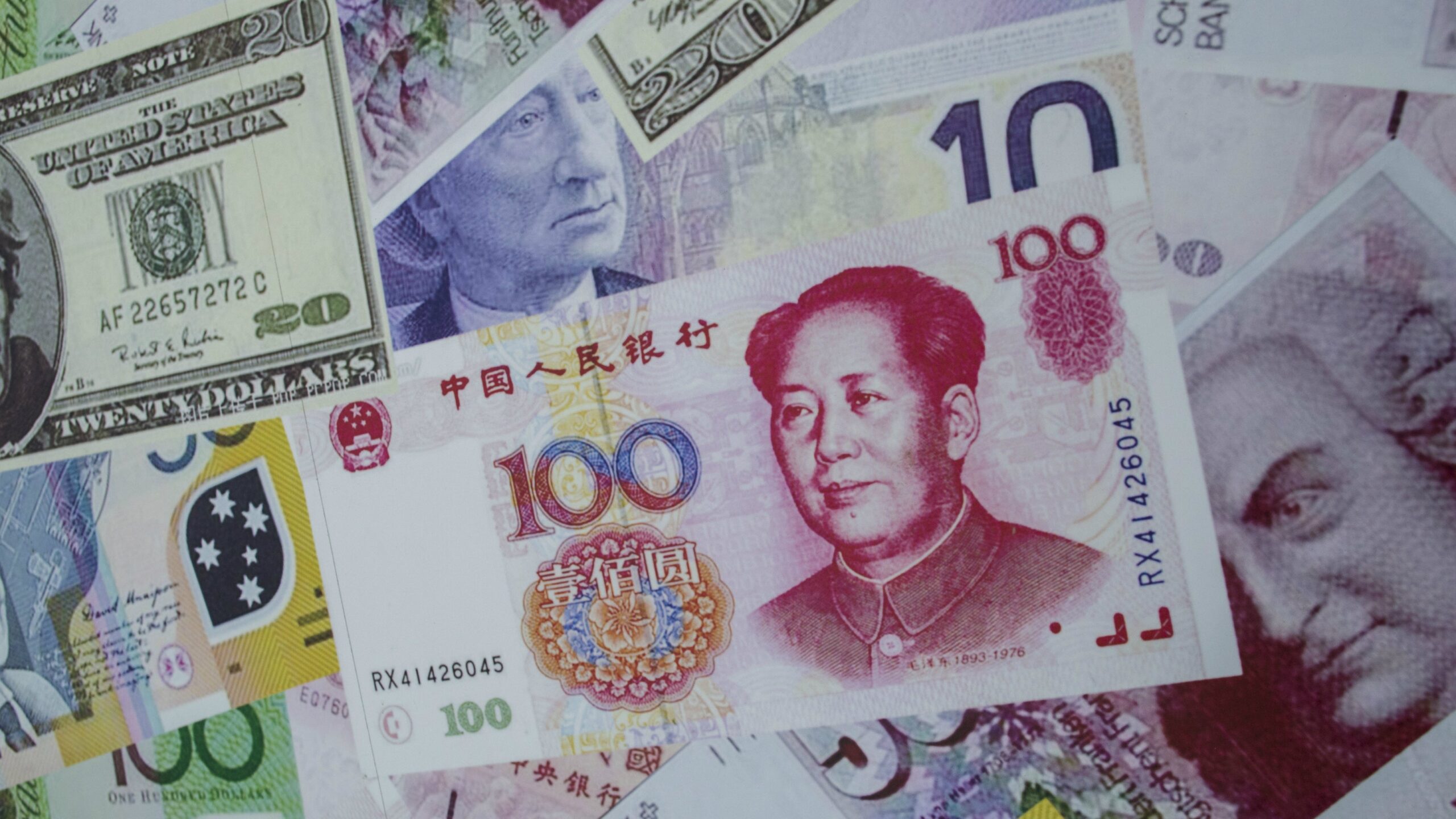
Why the U.S. and Japan Want a Stronger Yen: Lessons from China, Brazil, and the Mundell-Fleming Trilemma

Recent reports that the United States and Japan are discussing ways to strengthen the Japanese yen have attracted the attention of investors around the world. Although this topic may seem relevant only to currency markets, it provides valuable insights into how countries manage their exchange rates and why different economic systems make different policy choices.
It also offers an excellent opportunity to understand one of international economics’ most important concepts: the Mundell-Fleming Trilemma, also known as the “Impossible Trinity.”
Why Does the United States Prefer a Stronger Yen?
When a country’s currency is weak, its exported goods become cheaper for foreign buyers. This often improves the competitiveness of domestic manufacturers and can increase exports.
For many years, the Japanese yen remained relatively weak against the U.S. dollar, benefiting major Japanese exporters, particularly in the automotive, electronics, and industrial sectors.
By encouraging a stronger yen, the United States hopes to reduce some of these competitive advantages and help narrow trade imbalances between the two economies.
Of course, exchange rates are influenced by many factors, including interest rates, inflation, economic growth, investor expectations, and central bank policies.
Why Did China Follow a Different Strategy?
China’s approach to exchange rate management has long differed from that of many advanced economies.
Rather than allowing the yuan to fluctuate freely according to market forces, Chinese authorities have historically intervened to maintain greater exchange rate stability.
At the same time, China imposed restrictions on cross-border capital movements. Businesses and investors face tighter controls when moving large amounts of money abroad compared to countries with fully open financial markets.
Another key element of China’s strategy has been the accumulation of one of the world’s largest foreign exchange reserves, holding trillions of U.S. dollars over the past several decades. These reserves provide policymakers with additional tools to influence currency markets when necessary.
Together, capital controls, substantial foreign reserves, and strong economic fundamentals enabled China to exercise greater influence over its exchange rate for many years.
Understanding the Mundell-Fleming Trilemma
The Mundell-Fleming Trilemma, often referred to as the Impossible Trinity, states that no country can simultaneously achieve all three of the following objectives:
- A fixed exchange rate;
- Free international capital flows;
- An independent monetary policy.
Countries can successfully achieve only two of these goals at the same time. Pursuing all three simultaneously is generally considered impossible in an open economy.
China’s Choice
Historically, China prioritized:
- Exchange rate stability;
- Independent monetary policy.
To accomplish this, the country accepted tighter controls on international capital flows.
This approach provided policymakers with greater economic control but also limited financial openness and market flexibility.
Brazil’s Choice
Brazil adopted a different strategy.
Since introducing a floating exchange rate system in 1999, the Brazilian real has been primarily determined by market forces, although the Central Bank may intervene during periods of excessive volatility.
At the same time, Brazil maintains relatively open capital markets while preserving the Central Bank’s independence to set interest rates according to domestic economic conditions.
This framework allows monetary policy to focus on inflation control without committing to a fixed exchange rate.
Is One Model Better Than the Other?
There is no universal answer.
Every country faces unique economic challenges, institutional structures, and policy priorities.
China’s model supported rapid industrialization and export-led growth but required greater government intervention and restrictions on capital mobility.
Brazil’s model provides greater market flexibility, allowing exchange rates to absorb external shocks while monetary policy responds to inflation and economic activity.
Each system involves trade-offs, and its effectiveness depends on a country’s long-term economic objectives and institutional framework.
What Can Investors Learn?
For investors, understanding these differences helps explain how exchange rate policies influence financial markets.
Changes in the currency strategies of major economies can affect commodity prices, capital flows, interest rates, stock markets, and global investment opportunities.
By following developments involving the Japanese yen, China’s exchange rate policy, and Brazil’s monetary framework, investors gain a broader understanding of how international economic decisions shape financial markets.
Final Thoughts
The renewed discussions between the United States and Japan about strengthening the yen go far beyond currency markets. They illustrate the practical implications of the Mundell-Fleming Trilemma, which forces every country to make important policy trade-offs.
While China historically chose greater control over its exchange rate and capital flows, Brazil opted for a floating exchange rate while preserving an independent monetary policy.
Neither approach is inherently superior. Each reflects different economic priorities, institutional choices, and stages of development. For investors, understanding these differences provides valuable context for interpreting global economic events and making more informed investment decisions.